Zinc is one of the trace elements that is mainly talked about "during cold season", but its role in the body is much broader than that. It is involved in hundreds of enzymatic reactions and is necessary for the normal functioning of the immune system all year round, not just when it is cold outside. In this article, we explain what zinc does in the body, what foods we get it from and when it is good to pay special attention to its intake.
What is the role of zinc in the body?
Zinc is a trace element that the body does not produce on its own and must be obtained regularly from food. It contributes to normal DNA and protein synthesis, normal carbohydrate and fatty acid metabolism, and normal acid-base balance. Zinc also participates in the normal process of cell division, contributes to normal cognitive function, and maintains normal testosterone levels in the blood. In short, it is a nutrient that supports many background processes, not just the „immunity“ with which it is usually associated.
Zinc and the immune system
Zinc is best known for its role in supporting the normal functioning of the immune system. Zinc also helps protect cells from oxidative stress, a process that is part of the body's natural response all year round, not just during a cold or flu. It is for this reason that zinc is often mentioned alongside vitamin C and echinacea in products aimed at supporting the immune system during the fall and winter months.
What foods do we get zinc from?
The richest sources of zinc are red meat, poultry, seafood (especially oysters), eggs and dairy products. Good amounts of zinc are found in plant sources such as legumes (lentils, chickpeas, beans), whole grains, pumpkin seeds and nuts. It is important to note that phytates in grains and legumes can somewhat reduce zinc absorption, so if you are eating a predominantly plant-based diet, it is a good idea to pay more attention to the variety and quantity of these sources.
Who is at risk of lower intake
People on a strictly plant-based diet are at higher risk of zinc deficiency (due to lower bioavailability of zinc from plant foods), older people, pregnant and lactating women (due to increased body needs), and people with a monotonous and unbalanced diet. Intense physical activity and increased sweating can also increase zinc needs. These are not diagnoses, but only factors in which it is wise to pay a little more special attention to the intake of this trace element - through food or, if necessary, through supplementation.
Zinc for skin, hair and nails
In addition to its role in the immune system, zinc also contributes to the maintenance of normal skin, hair and nails, as well as bones and vision. That's why zinc is often found in combination products aimed at appearance, along with biotin and other nutrients related to hair and nails - such as PLATINUM Hair, skin and nails or the more convenient form for everyday use Hair, Nails, and Skin — Jelly Beans.
When can a zinc supplement be helpful?
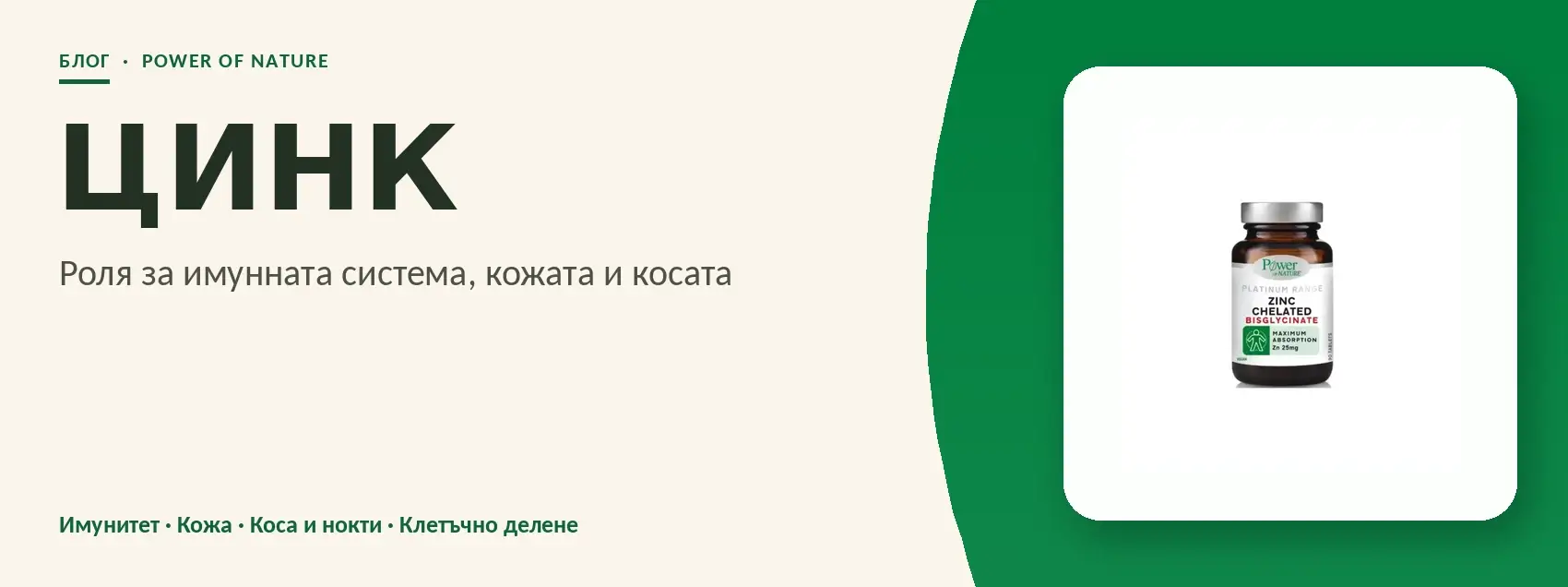
When the menu is monotonous, mostly plant-based, or limited for other reasons, a zinc supplement can be a convenient way to supplement your daily intake. In our catalog PLATINUM Zinc chelate 25 mg offers a standalone form of the trace element in an easily digestible chelated form. For combined intake with vitamin C — especially suitable during the cold months — Zinc + Vitamin C with Stevia in effervescent form and PLATINUM Zinc plus vitamin C in tablets combine both nutrients in one product. The full range of products targeting the immune system can be viewed at the category of our site.
This article is for informational purposes only and is not a substitute for professional advice. Dietary supplements are not a substitute for a varied and balanced diet and a healthy lifestyle.