Vitamin D is the only supplement that nutritionists in Bulgaria recommend almost everyone consider during the winter months — and there's a clear scientific reason for that. Unlike most vitamins, our bodies synthesize most of their vitamin D through the skin, when exposed to sunlight. However, in winter, the sun in Bulgaria is too low above the horizon for this process to occur. In this article, we look at the role of vitamin D3, why its intake drops during the cold months, and who is at higher risk of low intake.
What is the role of vitamin D3 in the body?
Vitamin D3 (cholecalciferol) is a fat-soluble vitamin with a broad spectrum of action. It contributes to the normal absorption and utilization of calcium and phosphorus, to the maintenance of normal blood calcium levels, as well as to the maintenance of normal bones, normal muscle function and normal teeth. Vitamin D3 also contributes to the normal functioning of the immune system and also plays a role in the process of cell division. It is precisely because of this combination of functions — bones, muscles and immunity — that it is among the supplements that customers ask about most often with the onset of autumn.
Why intake drops in winter and who is at higher risk
Bulgaria is located between 41° and 44° north latitude. Between November and March, the sun is too low above the horizon for the skin to synthesize enough vitamin D, regardless of how much time we spend outside. A Bulgarian study on vitamin D levels in the blood shows how pronounced this seasonal decline is: in winter, average levels in the study group drop to around 27 nmol/l, while they are over 61 nmol/l in summer, and nearly 76% of the subjects studied have levels below the threshold for sufficiency precisely in the cold months.
Those most at risk of low intake in winter are people who spend most of the day indoors (office work), the elderly (the skin synthesizes vitamin D more difficultly as we age), people with darker skin tones, and those who rarely consume oily fish or fortified foods. If you recognize yourself in any of these groups, it's a signal that you should pay more attention to your intake during the winter months.
Vitamin D3 from food or supplement
Dietary sources of vitamin D are relatively limited—oily fish (salmon, mackerel, sardines), egg yolks, and fortified foods contain some amounts, but rarely enough to meet daily needs, especially when solar synthesis virtually ceases in winter. Therefore, a vitamin D3 supplement is a convenient and predictable way to make up the difference, rather than relying solely on a seasonally limited menu.
Which D3 product to choose
Power of Nature offers vitamin D3 in several forms, according to personal intake preferences:
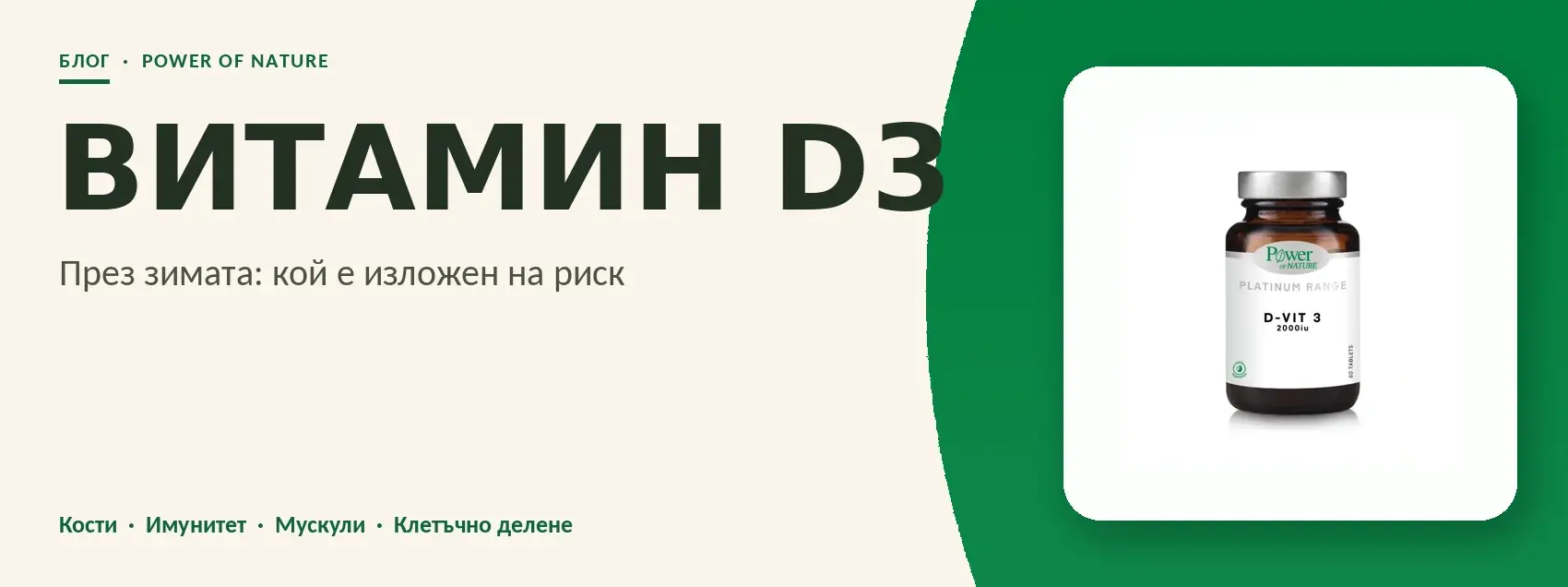
- Classic tablet D3 2000 IU — standard daily dose for everyday use. See PLATINUM Vitamin D3 2000 IU..
- Effervescent form D3 2000 IU with stevia — a soluble tablet for drinking, with vitamin C included. See Vitamin D3 2000 IU with stevia + Vitamin C.
- Combination Vitamin C + D3 in one tablet — for those who prefer to cover both doses with one tablet per day. See PLATINUM Vitamin C + D3, 1000 mg/1000 IU.
- Effervescent combination Vitamin C 1000 mg + D3 1000 IU with stevia — soluble form for those who prefer liquid intake in the morning. See Vitamin C 1000 mg + D3 1000 IU with stevia.
Also check out the full range of Power of Nature multivitamins in the category Multi-vitamins, if you are looking for broader coverage of daily vitamin and mineral intake.
Frequently Asked Questions
During which months is it best to take vitamin D3? In Bulgaria, solar synthesis is severely limited from approximately November to March, so it is during this period that the supplement is most useful for maintaining intake.
When is it best to take it — in the morning or in the evening? Vitamin D3 is fat-soluble, so it is recommended to take it with food containing fat for better absorption — regardless of the time of day.
Are there any side effects? When taken at the recommended daily dose indicated on the label, vitamin D3 is generally well tolerated. If you have any existing health conditions or are taking medications, it is a good idea to consult a doctor or pharmacist before starting to take it.
Summary
Vitamin D3 plays a key role in bone, muscle function and the immune system, and during the winter months our bodies lose its main natural source – sunlight. For people who spend most of their day indoors, the elderly and those with limited oily fish intake, a vitamin D3 supplement is a practical way to support their daily intake during the cold season. Explore the full range of Power of Nature vitamin D3 supplements to find the right form for you.
* Health claims for vitamin D3 have been officially approved by the European Food Safety Authority (EFSA). Food supplements are not a substitute for a varied and balanced diet and a healthy lifestyle. This article is for informational purposes only and does not replace medical advice.